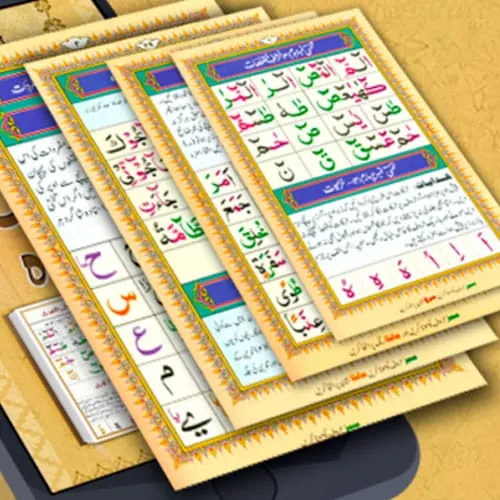

The most common Tajweed mistakes are mixing up similar letters, skipping ghunnah, holding madd for the wrong length, missing qalqalah and stopping in the wrong place. Most can be fixed in a few weeks with a teacher who points them out.
1. Mixing similar letters
English speakers often confuse pairs such as Seen and Saad, Ha and Haa, Kaf and Qaf, or Dal and Daad. Each has its own point of articulation (makhraj) and its own heaviness or lightness.
2. Dropping the ghunnah
A Noon or Meem with shaddah needs a nasal sound held for about two counts. Rushing past it is one of the most frequent errors.
3. Wrong madd length
Natural madd is two counts; some types are held for four to six. Shortening or stretching them changes the rhythm and sometimes the meaning.
4. Missing qalqalah
The letters Qaf, Ta, Ba, Jeem and Dal echo slightly when they carry a sukoon. Without it they sound swallowed.
5. Heavy and light letters
Letters like Saad, Daad, Ta and Za are heavy; most others are light. Making a light letter heavy, or the reverse, is a common slip.
6. Stopping in the wrong place
Stopping mid-phrase can change meaning. Learn the stop signs in your Mushaf and when to resume.
New to the rules? Start with our Tajweed rules for beginners. To fix mistakes with a teacher, join our online Tajweed course.
Frequently Asked Questions
Which Arabic letters do English speakers confuse most?
Pairs like Seen/Saad, Ha/Haa, Kaf/Qaf and Dal/Daad, because English has no exact equivalents.
Can I fix Tajweed mistakes on my own?
Listening to good reciters helps, but a teacher is needed to hear and correct mistakes you cannot hear yourself.
How long does it take to fix old mistakes?
Most students see clear improvement within a few weeks of regular classes.