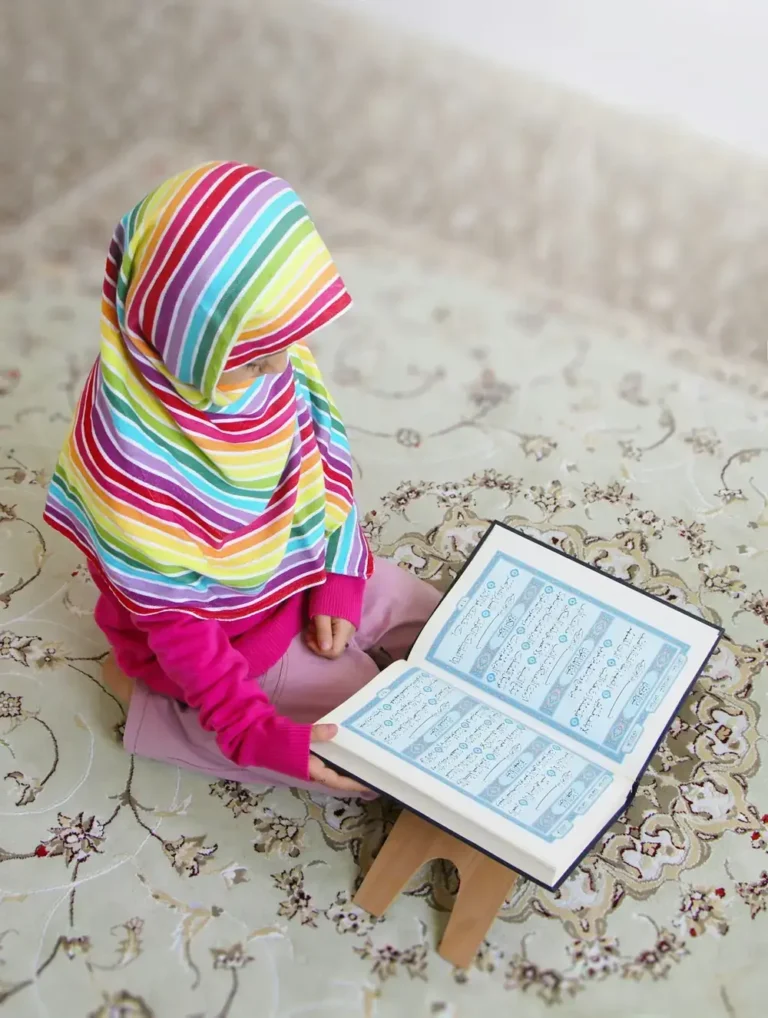
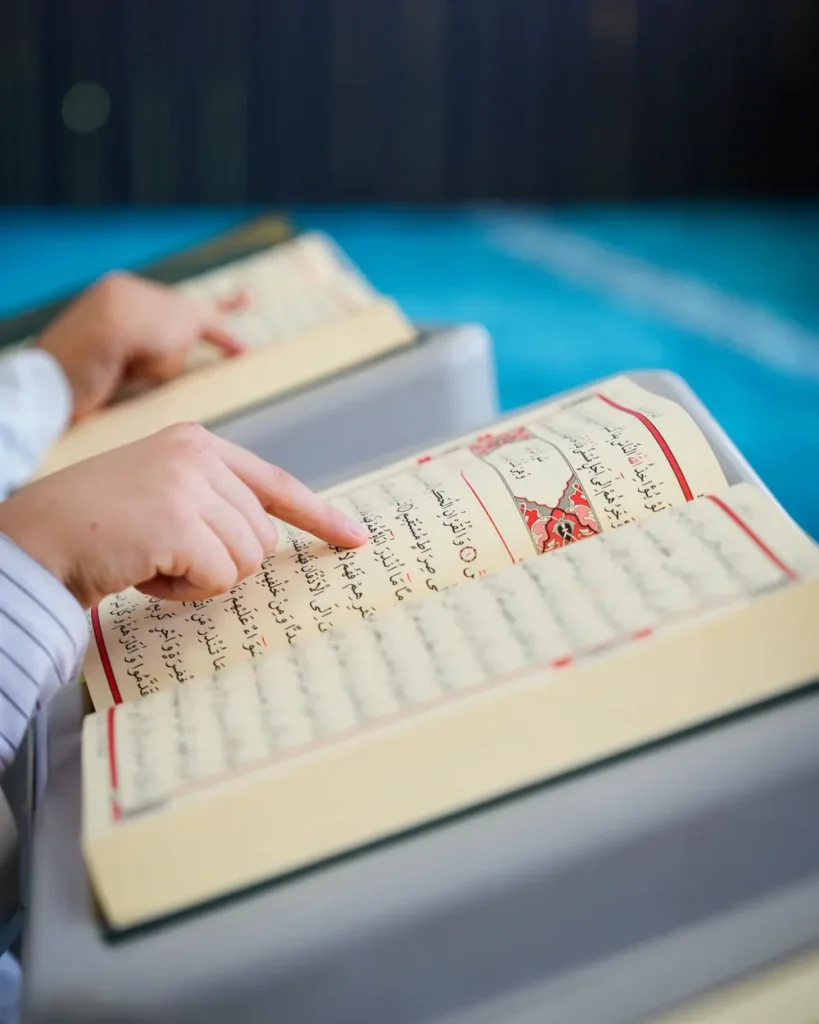
Tajweed is the set of rules for reciting the Quran correctly, giving every letter its proper sound, length and quality. The word comes from the Arabic root meaning “to make better”. You do not need to learn every rule at once: a handful of core rules covers most of what beginners meet in daily recitation.
Why Tajweed matters
Some Arabic letters sound similar to English ears, and small changes in pronunciation or length can change the meaning of a word. Tajweed protects the meaning and lets you recite the Quran the way it was taught by the Prophet ﷺ to his companions.
1. The rules of Noon Sakinah and Tanween
When a Noon with a sukoon (no vowel) or a Tanween (double vowel) is followed by certain letters, it is pronounced in one of four ways:
| Rule | What happens |
|---|---|
| Izhar (clear) | The Noon is pronounced clearly before the six throat letters. |
| Idgham (merging) | The Noon merges into the next letter, often with a nasal sound (ghunnah). |
| Iqlab (changing) | Before the letter Ba, the Noon changes into a hidden Meem sound. |
| Ikhfa (hiding) | Before the remaining 15 letters, the Noon is partly hidden with a nasal sound. |
2. The rules of Meem Sakinah
- Ikhfa Shafawi: before Ba, the Meem is hidden with a light nasal sound.
- Idgham Shafawi: before another Meem, the two merge with ghunnah.
- Izhar Shafawi: before all other letters, the Meem is pronounced clearly.
3. Qalqalah (the echoing sound)
Five letters, Qaf, Ta (the heavy one), Ba, Jeem and Dal, get a slight bouncing echo when they have a sukoon or when you stop on them. A common memory phrase for them is “Qutbu Jad”.
4. Madd (lengthening)
Madd means stretching a vowel sound. The natural Madd is held for 2 counts. Other types of Madd, for example when a Hamzah follows, are held for 4 to 6 counts.
5. Ghunnah (the nasal sound)
Ghunnah is a nasal sound held for about 2 counts. It always appears on a Noon or Meem with a shaddah, and in several of the rules above.
How to learn Tajweed properly
Reading about the rules helps, but Tajweed is learned through listening and correction. A teacher hears mistakes you cannot hear yourself and corrects them before they become habits. That is why our Quran reading with Tajweed course is taught live and one-on-one.
Beginner tip: focus on one rule per week. Practise it in the short surahs you already know, then move on.
Frequently Asked Questions
What is Tajweed in simple words?
Tajweed is reciting the Quran correctly: pronouncing every letter properly and with the right length and sound.
How many Tajweed rules are there?
There are many detailed rules, but beginners mainly need Noon Sakinah and Tanween, Meem Sakinah, Qalqalah, Madd and Ghunnah.
Is Tajweed compulsory?
Scholars teach that reciting with basic Tajweed, so that letters and meanings are not changed, is required, while the finer details are a matter of excellence.
How long does it take to learn Tajweed?
Most students learn the core rules in 3 to 6 months of regular classes, then keep improving through practice with a teacher.